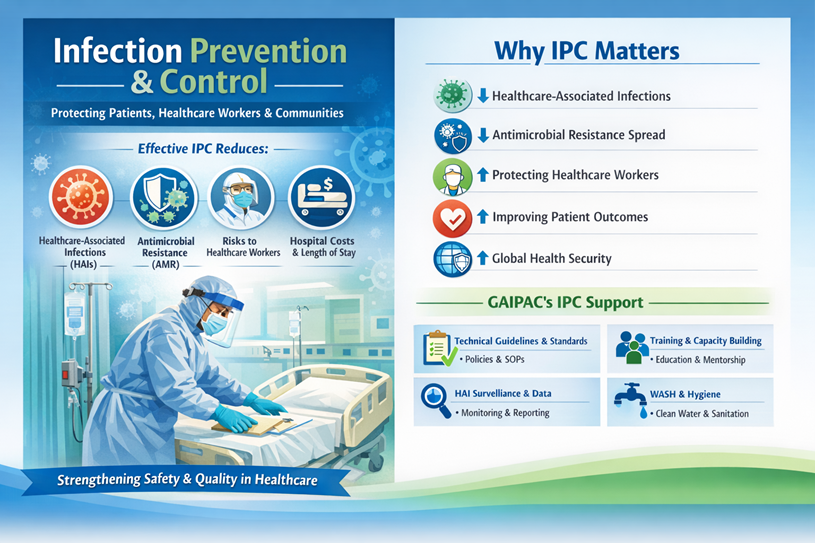
Infection Prevention & Control (IPC) is a core component of safe, high-quality healthcare. It encompasses evidence-based policies, practices, and behaviours designed to prevent the transmission of infections within healthcare facilities and the community. Effective IPC protects patients, healthcare workers, and communities, reduces avoidable harm, and preserves the effectiveness of antimicrobials.
Why IPC Matters
Weak IPC systems are a major driver of healthcare-associated infections (HAIs), outbreaks, and the spread of antimicrobial resistance (AMR). Strong IPC delivers measurable benefits by:
- Reducing HAIs and outbreaks, including those caused by drug-resistant organisms
- Protecting healthcare workers and maintaining service continuity
- Improving quality of care and patient trust
- Lowering costs by reducing prolonged hospital stays and unnecessary antibiotic use
- Strengthening global health security through preparedness and rapid response
IPC is therefore fundamental to health system strengthening, pandemic preparedness, and One Health action
GAIPAC’s Technical Support in IPC
The Global Alliance for Infection Prevention & AMR Control (GAIPAC) provides end-to-end, practical, and context-specific IPC support from policy to bedside implementation tailored to national priorities and facility realities.
1) Technical Guidelines & Standards
- Development and updating of national and subnational IPC policies and guidelines
- Adaptation of international standards to local contexts and resources
- Facility-level SOPs, care bundles, and job aids for high-risk areas (ICU, OT, dialysis, NICU, oncology)
2) Technical Advisories & Rapid Support
- On-demand technical advisories during outbreaks and emergencies
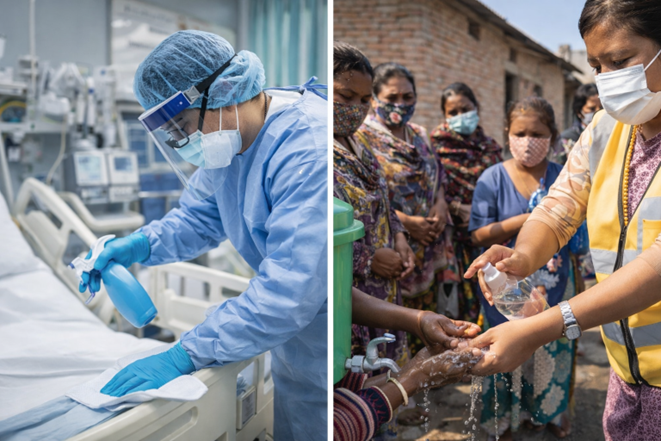
- Expert guidance for HAI prevention, isolation practices, PPE use, environmental cleaning, and waste management
- Independent technical reviews, audits, and gap analyses
3) Training, Mentorship & Capacity Building
- Competency-based IPC trainings for healthcare workers, IPC teams, and leadership
- Train-the-trainer programs, mentorship, and supportive supervision
- Integration of IPC into pre-service and in-service education
4) IPC Program Development & Implementation
- Establishment and strengthening of facility and national IPC programs
- Support for governance, staffing models, budgeting, and accountability mechanisms
- Implementation of WHO IPC Core Components across healthcare settings
5) HAI Surveillance & Data Use
- Design and implementation of HAI surveillance systems
- Support for data collection, analysis, dashboards, and feedback loops
- Use of surveillance data to guide quality improvement and antimicrobial stewardship
6) WASH & Environmental Health
- Strengthening Water, Sanitation and Hygiene (WASH) in healthcare facilities
- Guidance on safe water, sanitation, waste management, environmental cleaning, and disinfection
- Integration of WASH into IPC and One Health environmental risk reduction
Our Approach
GAIPAC works through partnership, practicality, and impact collaborating with governments, health facilities, development partners, and communities to deliver sustainable, data-driven IPC solutions. Our work aligns IPC with AMR control, quality improvement, and health security, ensuring safer care today and stronger systems for the future.